
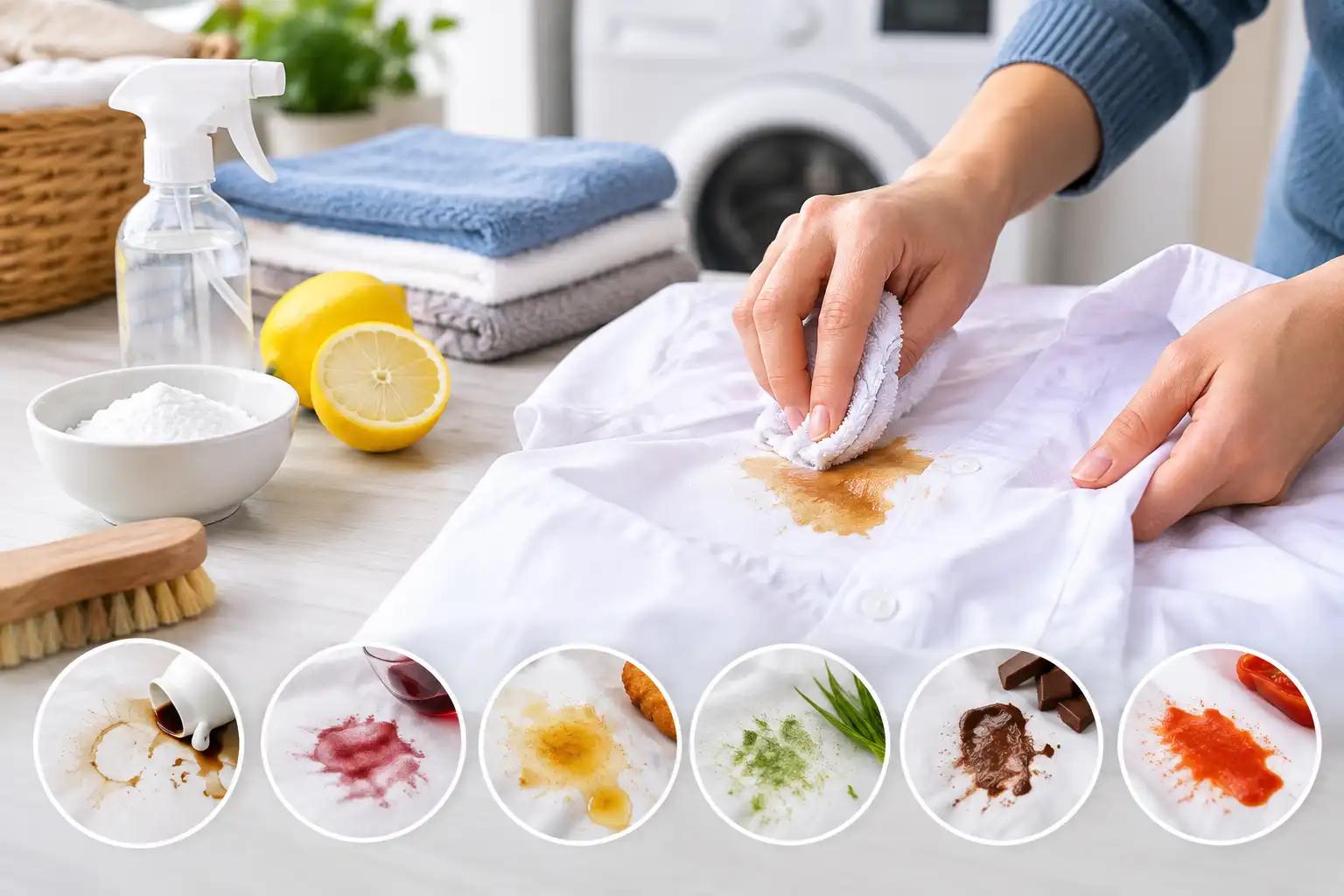
Sooner or later it happens to everyone. A glass of red wine tips over at dinner, a biro leaks in your pocket, or a drop of cooking oil lands on your favourite shirt. The good news is that most stains are not permanent, as long as you act quickly and treat them the right way. The bad news is that a few common mistakes can set a stain for good.
Here is a simple, fabric-friendly guide to removing the stains people deal with most, and the rules that make all the difference.
The golden rules of stain removal
Before you reach for any particular treatment, these five rules apply to almost every stain:
- Act fast. A fresh stain is far easier to remove than one that has dried and set. The longer it sits, the deeper it bonds with the fabric.
- Blot, never rub. Rubbing spreads the stain and pushes it deeper into the fibres. Always blot gently with a clean, dry cloth, working from the outside of the stain inwards.
- Cold water first. Heat sets many stains permanently, especially oil, blood and wine. Start with cold water, not hot.
- Never tumble dry a stained item. The heat of the dryer bakes the stain in. Always check the stain is fully gone before drying.
- Test first. On coloured or delicate fabrics, test any treatment on a hidden area, like an inside seam, before you use it.
Keep those in mind and you have already avoided the biggest mistakes.
Red wine
One of the most feared stains, but very treatable if you are quick.
Blot up as much of the wine as you can with a dry cloth, changing to a clean section each time. Rinse with cold water from the back of the fabric to push the stain out rather than through. Then cover the stain with table salt, which draws the wine out of the fibres, and leave it for a few minutes before rinsing again. Repeat until the mark fades, then wash as normal. Never use hot water first, as it sets the colour.
Oil and grease
Oil repels water, which is why rinsing alone rarely works.
Blot away any excess oil, then sprinkle a little baking soda or cornflour over the stain to absorb what is left, and leave it for ten minutes. Brush it off, then work a small amount of washing-up liquid into the mark, as it is designed to cut grease. Leave it for ten minutes, then wash at the warmest temperature the care label allows. Do not tumble dry until the stain is completely gone, as heat sets grease permanently.
Ink
Whether ink comes out depends on the pen. Ballpoint ink is usually removable, but permanent marker, as the name suggests, often is not.
For ballpoint ink, place a clean cloth under the stain to catch what comes through, then dab the mark with a cotton pad dipped in a little surgical spirit or rubbing alcohol, working from the outside in and swapping to a clean area as the ink lifts. Rinse and wash as normal. Act before the ink dries for the best result.
Blood
Blood is a protein stain, and the key rule is simple: cold water only. Warm or hot water effectively cooks the protein into the fabric.
Rinse a fresh stain under cold running water from the back of the fabric, then rub in a little mild detergent and leave it to soak in cold water. For older, stubborn stains, a longer cold soak helps. Only wash once the mark has lifted.
Sweat and deodorant marks
Those yellowish underarm marks are a mix of sweat and deodorant that build up over time. A paste of baking soda and water, worked into the area and left for half an hour before washing, lifts most of them. Washing at the warmest temperature the fabric allows helps too. The trick is not to let them build up over many washes, as old marks are much harder to shift.
When to stop and call a professional
Home stain removal is great for everyday cotton and hard-wearing fabrics. But some situations call for a professional, and trying to fix them yourself often causes more damage:
- Delicate fabrics like silk, satin and wool, where water and rubbing can leave permanent marks. Our silk cleaning service is built for exactly these.
- “Dry clean only” garments, which should never be treated with water at home.
- Wedding dresses and special-occasion outfits, where the fabric and the memories are both irreplaceable. See our wedding dress cleaning service.
- Old or set-in stains that have already been through the wash, and anything you simply cannot afford to get wrong.
A good rule of thumb: if the item is valuable, delicate, or you are not sure what the stain is, do not experiment. Blot it, leave it, and bring it in.
Not sure? Bring it to us
If a stain has you worried, or the garment is too precious to risk, we are happy to take a look. At Ilford Dry Cleaners, we treat stains individually and match the method to the fabric, giving your clothes the best chance of coming back looking their best. Pop into 85 Ilford Hill or call us on 07774 694552, and remember, the sooner a stain is treated, the better the result. We also offer free collection and delivery on orders over £100 across Ilford and the surrounding areas.
Frequently Asked Questions
How do you get a dried-in stain out of clothes?
Soak it in cold water and treat it with a stain remover for that stain type. If it has already been washed or dried on heat, a professional cleaner is your best bet.
Does hot or cold water remove stains better?
Cold water. Heat sets oil, blood and wine stains permanently, so always start cold.
Why should you blot and not rub a stain?
Rubbing spreads the stain and pushes it deeper. Blot gently from the outside in.
Can all stains be removed?
Most everyday stains can, if treated quickly. Permanent marker and old set-in stains often can't.
Should I wash a stained item before the stain is gone?
Never tumble dry it, as heat sets the stain. Always check the stain is gone before drying.