
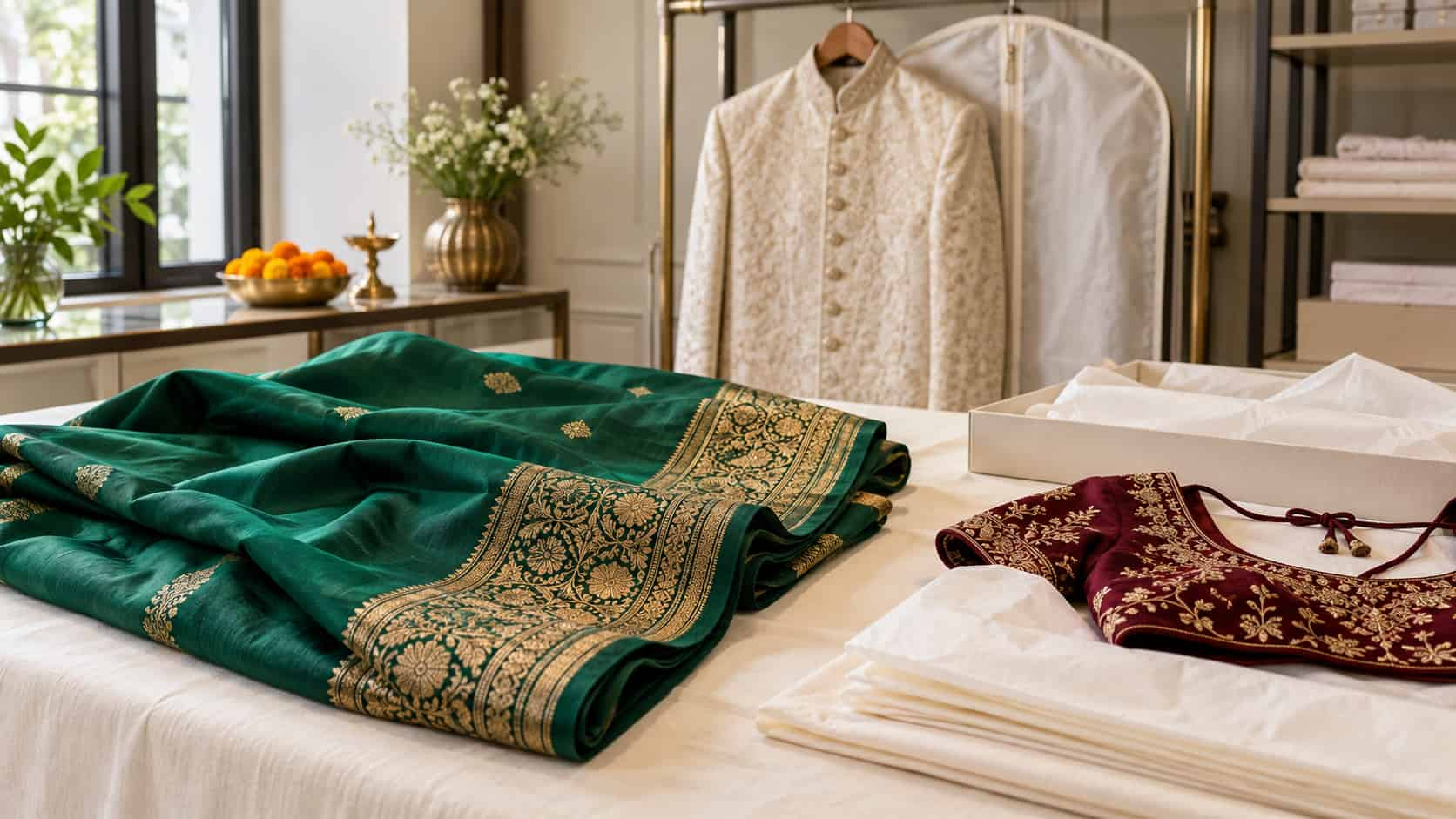
Diwali is the one time of year the best outfits come out. The silk sarees, the embroidered lehengas, the sherwanis and the heavily worked pieces saved for exactly this. And then, once the diyas are out and the celebrations are over, those same outfits usually end up folded back into a cupboard, often with a little more than good memories on them.
Festival clothes pick up a lot in a few days: food and sweet stains, oil from the diyas, mehndi, perfume and sweat from long evenings. Looked after properly now, your outfits will be ready and beautiful for next year. Left as they are, you may open the cupboard in a few months to find yellow marks and dull zari. Here is how to clean and store your Diwali outfits the right way.
Deal with stains gently, and quickly
The festival leaves behind some very particular marks, and the first rule applies to all of them: blot, never rub. Pressing a clean, dry cloth onto a fresh spill lifts it, while rubbing spreads it and pushes it into the fabric, and on delicate work it can lift the colour or loosen embellishment.
A few of the most common Diwali stains:
- Food, sweets and oil from the celebrations, often around the neckline, cuffs and lap.
- Diya and lamp oil, which lands on sleeves and hems without you noticing.
- Mehndi, one of the most stubborn stains of all, which sets fast and is very hard to remove once dry.
- Perfume and sweat, invisible at first, but they oxidise and yellow the fabric over the months that follow.
For anything on silk, zari or an embroidered piece, resist the urge to try home remedies. Vinegar, petrol, bleach and toothpaste are all passed around as “saree hacks”, and all of them can permanently damage silk fibres and tarnish metallic thread. If the piece is precious or heavily worked, the safest move is to leave the stain and take it to a specialist.
Which outfits should be dry cleaned
The rule with Indian festival wear is simple. If it is embellished, embroidered, or made of silk, it should be dry cleaned, not washed:
- Silk sarees, especially Banarasi, Kanjivaram and anything with real zari, which water dulls and can tarnish.
- Lehengas and bridal pieces, which combine delicate fabrics with beading and mirror work and should never be put in water.
- Sherwanis, which are structured and lined, so they need dry cleaning to keep their shape.
- Georgette and chiffon sarees, which are the weakest of all when wet.
Plain cotton suits and lightly worn pieces can often be hand washed in cold water, but when in doubt, check the care label, and when still in doubt, dry clean. For the pieces that matter, a cleaner who genuinely understands ethnic fabrics makes all the difference, which is exactly what our Indian dress dry cleaning service is for.
Always clean before you store, not before you wear
This is the habit that saves an outfit, and the one most people get backwards. Clean your festival clothes now, after wearing them, rather than leaving them until you want to wear them again.
The reason is those invisible stains. Sweat, oil and sugary food dry clear, then slowly oxidise and turn yellow or brown over the following months. Fold an outfit away with them still in it and they set permanently, so the saree you packed away looking perfect comes out marked. Cleaning straight after the festival, while the stains are fresh, gives the best chance of removing them completely.
How to store your Diwali outfits
Once cleaned, storage is what keeps them beautiful until next year:
- Never store them in a plastic cover. This is the big one. Plastic traps moisture, which yellows silk and turns zari black over time. Take the outfit out of any dry cleaner’s plastic the moment it comes home.
- Wrap in breathable muslin or cotton. This lets the fabric breathe while keeping dust off. Our guide on how to care for a silk saree goes into this in more detail.
- Fold with acid-free tissue between the layers of heavily embroidered pieces, to protect the zari and prevent creasing.
- Keep zari and stone-work pieces apart, so they do not snag each other.
- Store somewhere cool, dark and dry, away from sunlight and damp, and refold every few months so the same creases do not weaken the fabric.
- Avoid mothballs touching the fabric, as the chemicals damage silk and leave a lasting smell. Neem leaves are a gentler, traditional alternative.
A note on zari
Zari, the gold and silver thread, is the first thing to show its age. If it has started to look dull, you can very gently rub along the thread with a clean, soft, dry cloth, but never use metal polish or home acids on it. For heavier tarnishing, a specialist saree cleaner is the safe route. And never iron directly over zari, as heat discolours the metal thread. Iron on the reverse, with a pressing cloth, or steam instead.
Let us take care of your festival wear
After Diwali, let your best outfits be looked after properly. At Ilford Dry Cleaners, we specialise in cleaning sarees, lehengas, sherwanis and all kinds of Indian wear, treating every piece by hand where needed and matching the method to the fabric and the embellishment, so the colours stay rich and the zari stays bright, ready for the next celebration.
Bring your outfits into 85 Ilford Hill or call us on 07774 694552. The sooner they are cleaned after the festival, the better the result, and we also offer free collection and delivery on orders over £100 across Ilford and the surrounding areas.
Frequently Asked Questions
How do you clean a saree after Diwali?
For silk, zari or embroidered sarees, dry clean them, and do it soon after the festival while stains are fresh. Blot any spills gently rather than rubbing, and avoid home remedies on delicate fabric.
Can you remove mehndi stains from a saree?
Mehndi is one of the hardest stains and sets fast. On plain cotton you can try cold water quickly, but on silk, zari or embroidered pieces leave it to a specialist, as home treatments can cause permanent damage.
Should you clean Indian outfits before storing them?
Yes, always. Invisible stains from sweat, oil and sugary food oxidise and turn yellow over time, so clean festival wear soon after wearing, not before the next occasion.
How should you store a silk saree or lehenga?
Wrap it in breathable muslin or cotton, never plastic, place acid-free tissue between the folds, and keep it somewhere cool, dark and dry. Refold every few months.
Why does zari turn black in storage?
Storing a saree in a plastic cover traps moisture, which tarnishes the metallic zari thread and yellows the silk. Always use a breathable cotton or muslin wrap instead.