
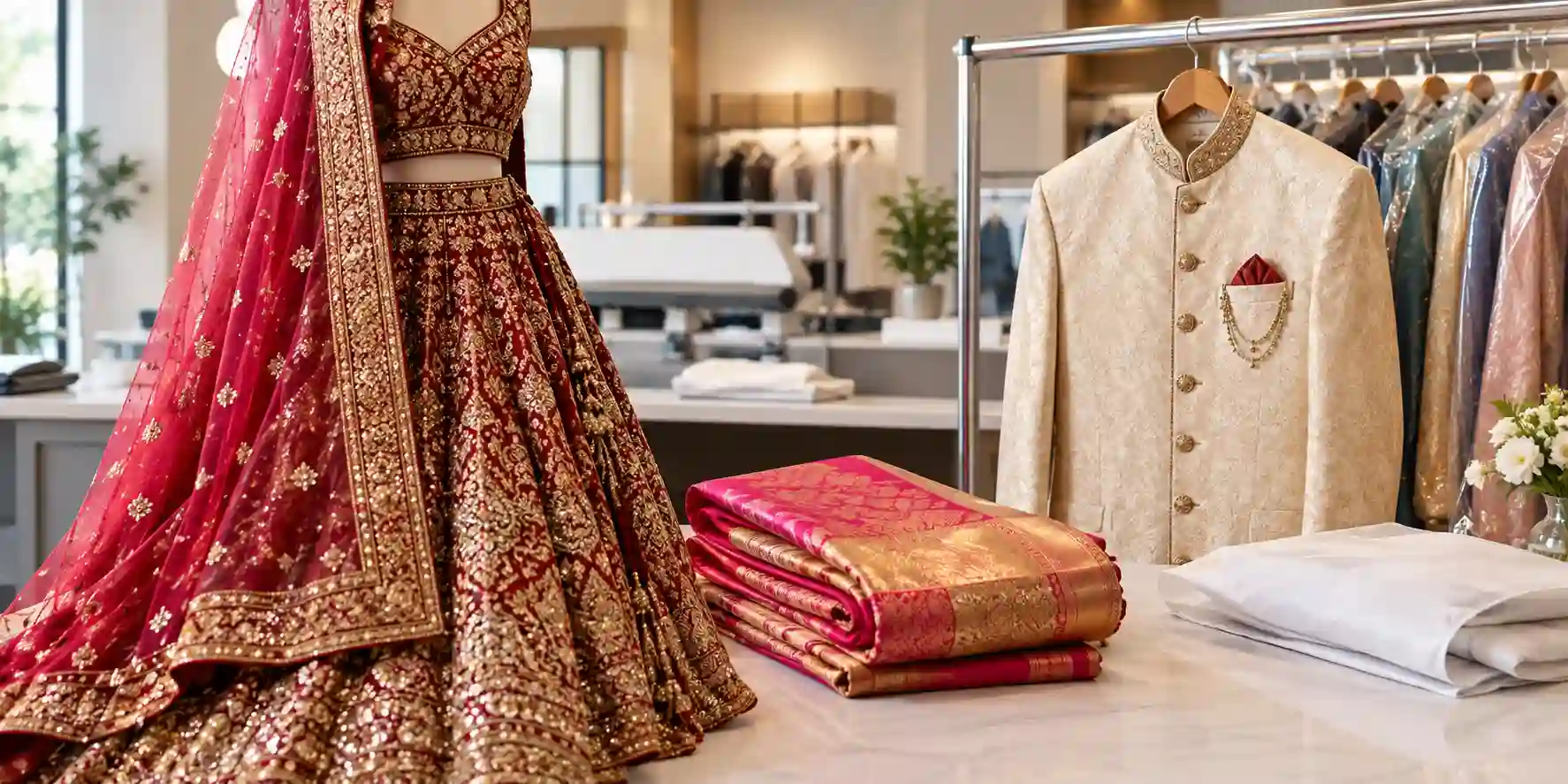
After the wedding is over, you are usually left with something beautiful and slightly worrying: a pile of heavily worked outfits that cost a small fortune and now smell of food, perfume and a long day of celebrating. A bridal lehenga, a groom’s sherwani, silk sarees for the family, all carrying invisible stains from garlands, haldi, mehndi and dinner.
So the natural question is: can you just take these to a dry cleaner? The short answer is yes, but with an important condition. Indian wedding outfits are not ordinary garments, and they should only go to a cleaner who genuinely understands ethnic fabrics and embellishment. Here is what you need to know.
Yes, but not just any dry cleaner
A regular dry cleaner can handle a suit or a coat. An Indian wedding outfit is a different challenge entirely. A single lehenga can combine silk, net, velvet and hundreds of hours of zari, sequin and mirror work, and each part behaves differently. Handled without care, the colours can bleed, the zari can tarnish and the delicate work can come loose.
That is why it matters to choose a cleaner who works with these garments regularly. The skills needed to clean a Banarasi saree or a bridal lehenga are simply not the same as cleaning everyday clothing. When you drop yours off, it is worth asking whether they handle sarees and lehengas often, because some cleaners do and many do not.
Which Indian outfits can be cleaned?
In the hands of a specialist, almost all of them, including:
- Sarees, from everyday silk to heavy Banarasi and Kanjivaram
- Lehengas, including bridal lehengas
- Sherwanis, which are structured and lined, so they need dry cleaning rather than washing
- Shararas, ghararas and Anarkali suits
- Kurtas, kurta pyjamas and Punjabi suits
- Heavily embroidered, zari and mirror-work pieces
Each is assessed individually, because the right method depends on the fabric and the embellishment, not on the type of outfit alone.
Why you should not wash them at home
It is tempting to save money and hand wash a saree or lehenga yourself. For anything embellished or expensive, this is where things go wrong. Water can make rich dyes bleed and, crucially, it can permanently tarnish zari, the gold and silver thread that makes these outfits so striking. Lehengas in particular are stitched and finished in layers that are not designed to be taken apart and washed, so a home wash often distorts the shape or damages the work.
The rule most specialists follow is simple: if the outfit is embellished, structured, or holds any emotional or financial value, leave it to a professional. A single mistake on a bridal lehenga is rarely fixable.
Clean it soon after the wedding, not months later
This is the tip most people wish they had known. Do not fold your outfits away “to deal with later”.
Stains you cannot even see, from sweat, food, drinks and body oils, oxidise over time and turn yellow or brown, often within a few months. Haldi (turmeric) and mehndi are especially stubborn and set fast. The longer a stain sits, the harder it becomes to remove. Having your outfits professionally cleaned within a week or two of the wedding gives you the best chance of getting them back looking their best.
How to store Indian outfits after cleaning
Cleaning is only half the job. Storage is what keeps an outfit beautiful for years.
- Never store an outfit in the dry cleaner’s plastic bag. This is the single most common cause of yellowing, as plastic traps moisture. Move it to a breathable cotton or muslin cover once you get home.
- Use acid-free tissue between the folds of heavily embroidered pieces to protect the zari and prevent creasing.
- Fold heavy lehengas and sarees flat rather than hanging them for years, as hanging stretches the fabric and distorts the waistband.
- Keep them somewhere cool, dark and dry, away from sunlight and damp.
- Refold every few months so the same creases do not weaken and split the fabric. The same care applies to sarees, which we cover in detail in our guide on how to care for a silk saree.
- Spray perfume before you dress, never onto the outfit, as the alcohol stains silk and dulls zari.
What about stains from the big day?
Wedding outfits collect very specific stains. Food and drink around the collar and cuffs, garland marks, haldi and mehndi. A specialist cleaner treats these individually and gently, rather than rubbing at them, which spreads the mark and can lift the colour. If you spill something on the day, blot it, do not rub, and get the outfit to a cleaner as soon as you can. The sooner it is treated, the better the result.
Let the specialists handle your wedding outfits
Your wedding outfits are irreplaceable, so they deserve more than a guess. At Ilford Dry Cleaners, we specialise in cleaning sarees, lehengas, sherwanis and all kinds of Indian wear, treating each piece by hand where needed and matching the method to the fabric and embellishment, so the colours stay rich and the zari stays intact. You can read more on our Indian dress dry cleaning page, and for pure silk pieces, our silk cleaning service is built for exactly this kind of delicate work.
Whether it is a bridal lehenga to preserve, or the whole family’s outfits to freshen up after the celebrations, bring them into our shop at 85 Ilford Hill or call us on 07774 694552. We also offer free collection and delivery on orders over £100 across Ilford and the surrounding areas.
Frequently Asked Questions
Can you dry clean a bridal lehenga?
Yes, but it should be done by a specialist who understands heavy embellishment. A bridal lehenga combines delicate fabrics with zari, sequins and mirror work, and should never be washed at home or taken apart, as this can damage the shape and the embroidery.
Can dry cleaners clean sherwanis?
Yes. A sherwani is a structured, lined garment, so it needs dry cleaning rather than washing. Cleaning it soon after the wedding removes food, garland and sweat marks from the collar and cuffs before they set.
How soon should I clean my wedding outfit?
Ideally within one to two weeks of the wedding. Invisible stains from sweat, food and haldi oxidise over time and turn yellow, so cleaning early gives the best chance of full removal.
Can you remove haldi or mehndi stains?
These are among the hardest stains, but a specialist can often improve or remove them, especially if treated quickly. Blot a fresh spill rather than rubbing it, and bring the outfit in as soon as possible.
How should I store my lehenga or saree after cleaning?
Take it out of any plastic cover, wrap it in breathable muslin or cotton, place acid-free tissue between the folds, and store it flat in a cool, dark, dry place. Refold it every few months.