
The dress is off, the honeymoon is booked, and your gown is hanging on the back of the door, or worse, already zipped into the bag it came in. It is the easiest thing in the world to deal with “later”. But when it comes to a wedding dress, later is exactly the problem. The way you treat your gown in the first few weeks after the wedding decides whether it stays beautiful for decades or quietly turns yellow at the back of the wardrobe.
Here is a clear, no-panic guide to cleaning and storing your wedding dress after the big day, what to do straight away, what you can do at home, and when it is worth calling in a specialist.
The first 48 hours: what to do straight away
Before you even think about cleaning, a few simple things in the first day or two protect your dress:
- Get it out of the plastic bag. This is the single most common mistake. Plastic traps moisture against the fabric, which leads to mildew and yellowing. Hang the dress on a padded hanger instead so it can breathe.
- Keep it out of direct sunlight. Sunlight yellows white and ivory fabrics faster than almost anything else, so a cool, dry spot like a bedroom cupboard is ideal, not a sunny window.
- Resist the urge to spot-clean stains yourself. Rubbing at a wine or make-up mark on delicate bridal fabric usually spreads it or lifts the colour. Leave it for a professional.
That is it for day one. The dress is safe to wait a short while, as long as it is breathing and out of the light.
Act within weeks, not months
This is the part brides most often get wrong, and it matters more than anything else.
Your dress picks up far more than you can see on the day: champagne, white wine, cake, perfume, make-up around the neckline, and sweat and body oils from hours of dancing. The trouble is that many of these are invisible at first. Sugary and clear stains dry clear, then slowly oxidise and turn yellow or brown over the following months. By the time you can see them, they have set into the fabric and are far harder to remove.
The advice from bridal garment specialists is consistent: have your dress professionally cleaned within two to a few weeks of the wedding. The sooner those invisible stains are treated, the better the chance of removing them completely. Leave it a year and you are often dealing with permanent yellowing.
Can you clean a wedding dress at home?
Honestly, it is not worth the risk. A wedding dress is one of the most complex garments there is, often combining silk, lace, tulle, a structured bodice, beading and a long train, and each of those reacts differently to water and cleaning. Many are labelled dry clean only for exactly this reason. Water can shrink or mark the fabric, beading can come loose, and delicate silk can lose its colour and sheen in moments.
Home stain removers are especially risky, as what works on a cotton shirt can bleach or stain bridal fabric permanently. For a dress that is both expensive and irreplaceable, this is one job where the small cost of a professional is well worth the peace of mind.
How a professional cleans a wedding dress
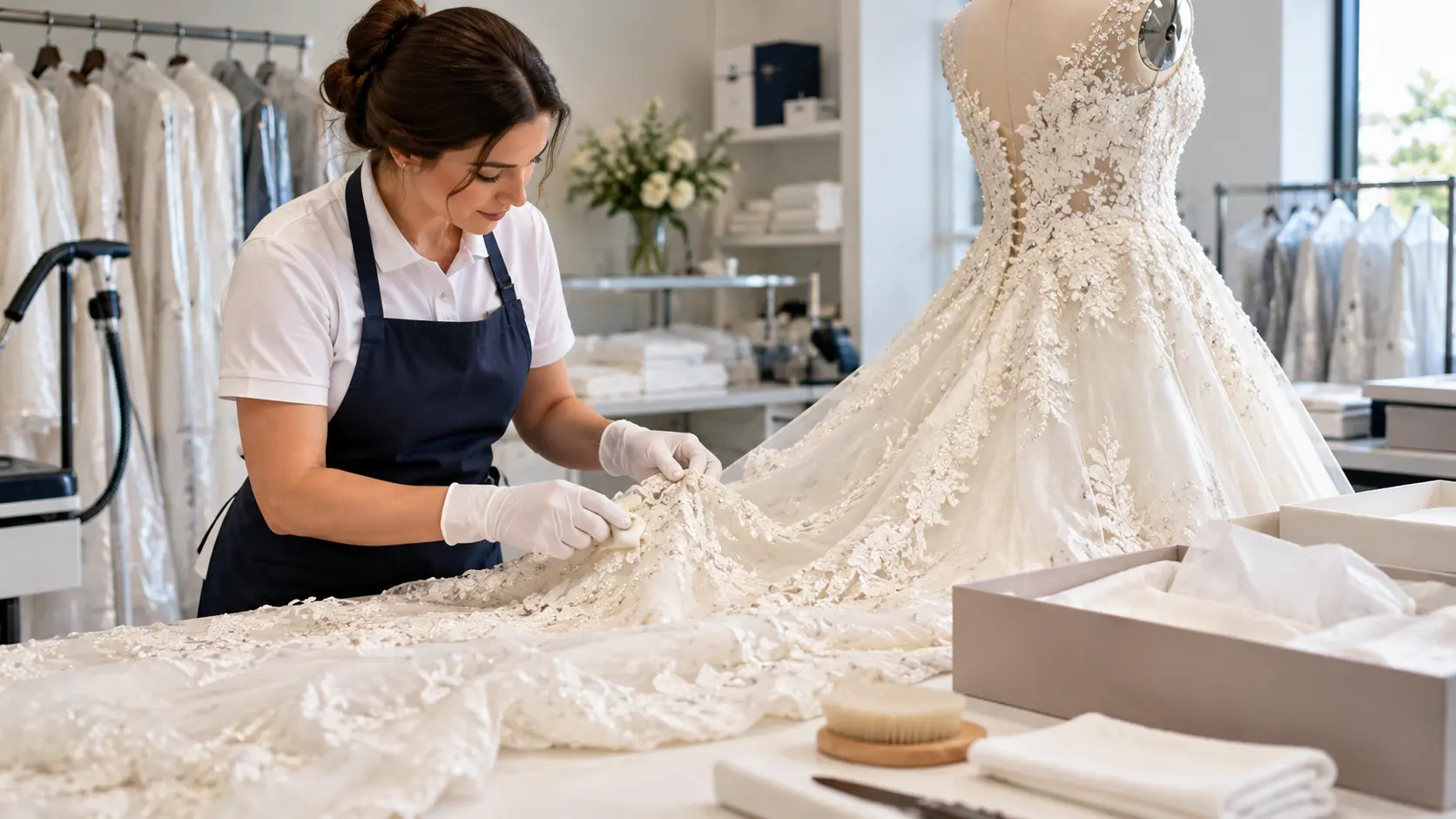
A proper wedding dress clean is nothing like putting a suit through a machine. It should be:
- Inspected first. The gown is examined for stains, loose beading and weak seams, and the fabric and embellishments are identified.
- Stain-treated by hand. Each mark is treated individually, from visible wine and grass on the hem to the invisible sweat and sugar that cause yellowing later.
- Cleaned by the right method. Dry cleaning, wet cleaning or hand cleaning, chosen to suit the fabric rather than a one-size-fits-all cycle.
- Pressed and finished. So the gown looks its best and is ready to wear again or to store.
The key is that every dress is handled individually. This is why it is worth choosing a cleaner who actually works with gowns, rather than one that sends your dress through with the week’s shirts. You can see how we approach it on our wedding dress cleaning page.
How to store your dress so it lasts
Once your gown is cleaned, storage is what keeps it beautiful:
- Only ever store a clean dress. Sealing away a dress with invisible stains locks them in and guarantees yellowing. Clean first, always.
- Use acid-free tissue and a breathable cover. Ordinary cardboard, newspaper and cheap tissue are acidic and slowly yellow the fabric over the years. Acid-free materials prevent this.
- Fold with acid-free tissue between the layers, or store flat, rather than hanging a heavy gown for years, which stretches the fabric at the shoulders.
- Keep it somewhere cool, dark and dry, away from lofts and garages where heat and damp do the most damage.
Stored properly, a cleaned and preserved gown can stay in beautiful condition for fifty years or more, long enough for the next generation.
What if your dress has been stored for years already?
Do not panic, and do not assume it is ruined. Even a dress that has been sitting in a bag for years can usually be improved. Yellowing can often be reduced, and old stains treated, though results depend on the age and severity of the marks. If your gown has already turned, the best thing you can do is stop storing it in plastic and have it looked at by a professional, the sooner the better, as the discolouration only deepens with time.
Protect the dress that meant the most
Your wedding dress carries the memory of one of the biggest days of your life, so it deserves more than a bin bag at the back of the wardrobe. At Ilford Dry Cleaners, we clean and care for wedding gowns individually, treating every stain by hand and matching the method to the fabric, so the colours stay true and the detail stays intact, whether you want to wear it again, keep it, or pass it on.
Bring your gown into 85 Ilford Hill or call us on 07774 694552. The sooner it is cleaned after the wedding, the better the result, and we also offer free collection and delivery on orders over £100 across Ilford and the surrounding areas.
Frequently Asked Questions
How soon should you clean a wedding dress after the wedding?
Within two to a few weeks. Invisible stains like champagne, sweat and sugar oxidise and turn yellow over time, so cleaning early gives the best chance of full removal.
Can you clean a wedding dress at home?
It is not recommended. Wedding dresses combine delicate fabrics, beading and structure, and home washing or stain removers can shrink, mark or discolour them permanently.
Why do wedding dresses turn yellow?
Yellowing is caused by invisible stains, such as sweat and sugary drinks, oxidising over time, and by storing the dress in plastic or acidic materials that trap moisture.
How should you store a wedding dress?
Only store it once cleaned. Wrap it in acid-free tissue, use a breathable cover rather than plastic, and keep it somewhere cool, dark and dry.
Can an old or stored wedding dress still be cleaned?
Usually, yes. Even a gown stored for years can often be improved, and yellowing reduced, though results depend on how old and set-in the marks are.