
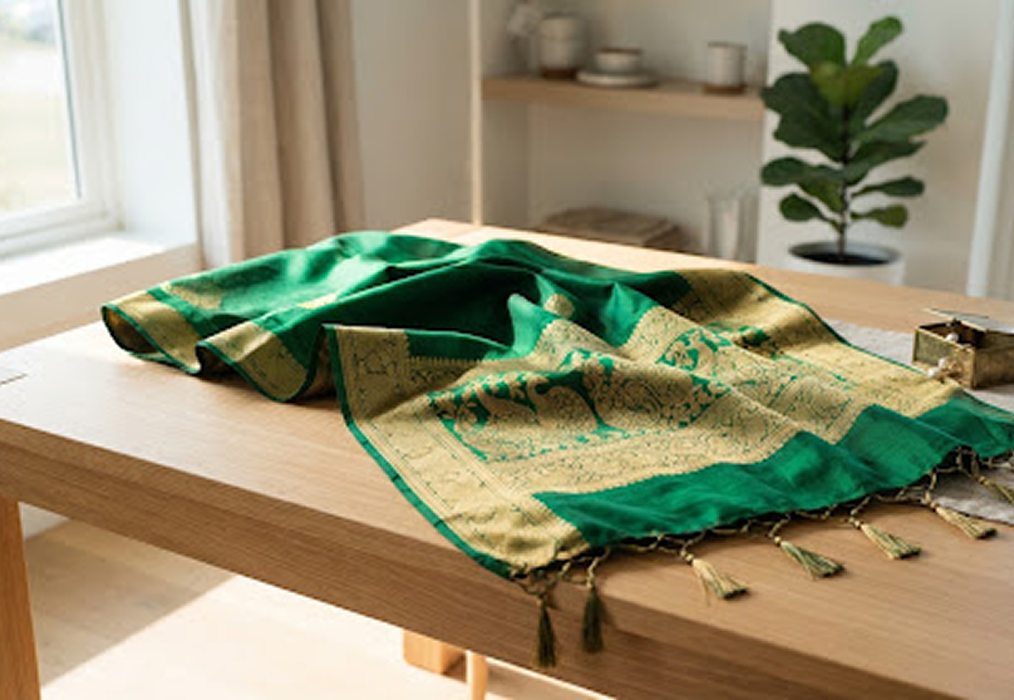
A good silk saree is never just a piece of clothing. It might be a wedding saree, a gift from your mother, or an outfit you save for Eid, Diwali or a family celebration. Looked after well, a silk saree can stay beautiful for decades and even be passed down. Looked after badly, it can yellow, lose its shine or tear along a fold, often while it is just sitting in a wardrobe.
The good news is that keeping a silk saree in lovely condition is not complicated. It comes down to a few simple habits. Here is what actually makes the difference.
Why silk sarees need special care
Silk is a natural fibre, and that is exactly what makes it both beautiful and fragile. It reacts badly to heat, harsh detergents and moisture, and its rich dyes can bleed if treated the wrong way. Add delicate zari work, sequins or embroidery, and you have a garment where one careless wash or a bad fold can cause damage that cannot be undone.
Most saree damage does not happen when you wear it. It happens in storage, slowly, over months and years. Get the storage right and you have won most of the battle.
Always clean your saree before storing it
This is the single most important habit, and the one most people skip. Never put a silk saree away for the season with invisible marks still on it.
Body oils, sweat, perfume and small food or drink splashes may not be visible on the day, but over time they oxidise and turn yellow or brown. The longer they sit, the harder they are to remove. A saree that looked perfect when you folded it can come out of the wardrobe months later with stains you never knew were there.
For pure silk, and especially for anything with zari, embroidery or heavy embellishment, professional dry cleaning is the safest way to clean it before storage. It lifts the oils and marks without the water and agitation that can shrink silk or make the colours run.
How to store a silk saree properly
Once your saree is clean, storage is everything.
Wrap it in muslin or cotton, never plastic. Silk needs to breathe. Plastic covers trap moisture, and trapped moisture leads to yellowing, mildew and that musty smell. Wrap each saree in a soft muslin or pure cotton cloth instead, so air can circulate while dust stays out.
Keep it somewhere cool, dark and dry. Sunlight fades the colours and damp invites mould, so avoid window sills, lofts and anywhere that gets humid. A drawer or wardrobe shelf is ideal.
Fold heavy sarees, don’t hang them. Hanging a heavy silk or zari saree for a long time stretches the fabric and puts strain on the pallu and borders, which can lead to tearing. For long-term storage, folded and flat is safer.
Use acid-free tissue for embellished pieces. For sarees with heavy zari or embroidery, place acid-free tissue paper between the folds. It cushions the work and helps prevent creasing and yellowing. Ordinary paper and newspaper should be avoided, as the ink and acids can transfer onto the fabric.
Refold your saree every few months
Here is a tip that most people have never heard, and it can genuinely double the life of a saree.
If you fold a silk saree the same way and leave it for years, the fibres along those fold lines slowly weaken and can eventually split. You will see it as a thin, faded line across the fabric, often mistaken for a stain, when really it is the silk giving way.
The fix is simple. Every three to six months, take the saree out, unfold it, let it air in a shaded spot for an hour, and then refold it along slightly different lines. This spreads the stress across the fabric instead of concentrating it in the same place, and it lets you check for any moisture or pests at the same time.
Looking after zari, sequins and embroidery
Zari, the gold and silver thread work, is often the most valuable part of a saree and the most delicate. Moisture and air exposure can darken it or dull its shine over time.
A few simple rules help. Keep perfumes and deodorants away from the saree, as the alcohol in them can stain silk and tarnish zari, so always spray fragrance before you drape, never onto the fabric. Keep mothballs from touching the silk directly, and use natural repellents like neem leaves instead. And if a piece needs freshening, steaming gently is kinder to zari than pressing a hot iron straight onto it.
Should you wash a silk saree at home?
For a heavily embellished, zari-work or wedding saree, the honest answer is no. Water can cause the colours to bleed, shrink the silk and loosen the embellishments, and a single mistake on an expensive saree is rarely fixable. These pieces are best left to a cleaner who understands ethnic fabrics.
Lightly worn, plain silk can sometimes be hand washed very gently in cold water, but if the saree matters to you, professional cleaning takes the risk out of it entirely.
Let the specialists handle the precious pieces
Your best sarees deserve more than a guess. At Ilford Dry Cleaners, we specialise in cleaning sarees and other Indian outfits, treating each piece by hand where needed and matching the method to the fabric and the embellishment, so the colours stay rich and the zari stays intact. You can see more on our Indian dress dry cleaning page, and if it is the fabric itself you are worried about, our silk cleaning service is built exactly for delicate pieces like these.
Whether you need a saree cleaned before you store it away, or freshened up before the next occasion, bring it into our shop at 85 Ilford Hill or call us on 07774 694552. We also offer free collection and delivery on orders over £100 across Ilford and the surrounding areas.